In today’s dynamic world, it’s only fitting that history keeps up. Museums are always looking for ways to change. They represent not only the past, but the present and the future- aiming not just to educate us about old ways, but also to teach us how to see things from a different perspective.
Collections management can seem like a “static” practice, but in reality, it is quite dynamic. Systems and policies have to be constantly updated, leaving room for new discoveries and public interests (Svansberg, 2018).
When I was an undergraduate at Miami University, I wasn’t sure where my anthropology degree would take me. I had ideas about going all in on archaeology, so I joined a group in the archaeology department that we affectionately called “Squad.” We worked under our professor to help with tasks in our collection. That’s what introduced me to the world of collections management. Even doing the menial tasks such as scrubbing the artifacts with a toothbrush or scanning old files felt special to me. Most of the days were spent in that routine- analyze artifacts, clean artifacts, scan artifacts, repeat. When NAGPRA laws changed in 2024, we spent days going through our collection, taking note of anything we had that might have needed to be repatriated. I also got a taste of some of the bureaucratic work, spending many days in the office of the anthropology department. This, along with the lab work I did during my time at field school, led me to pursue a museums studies degree.
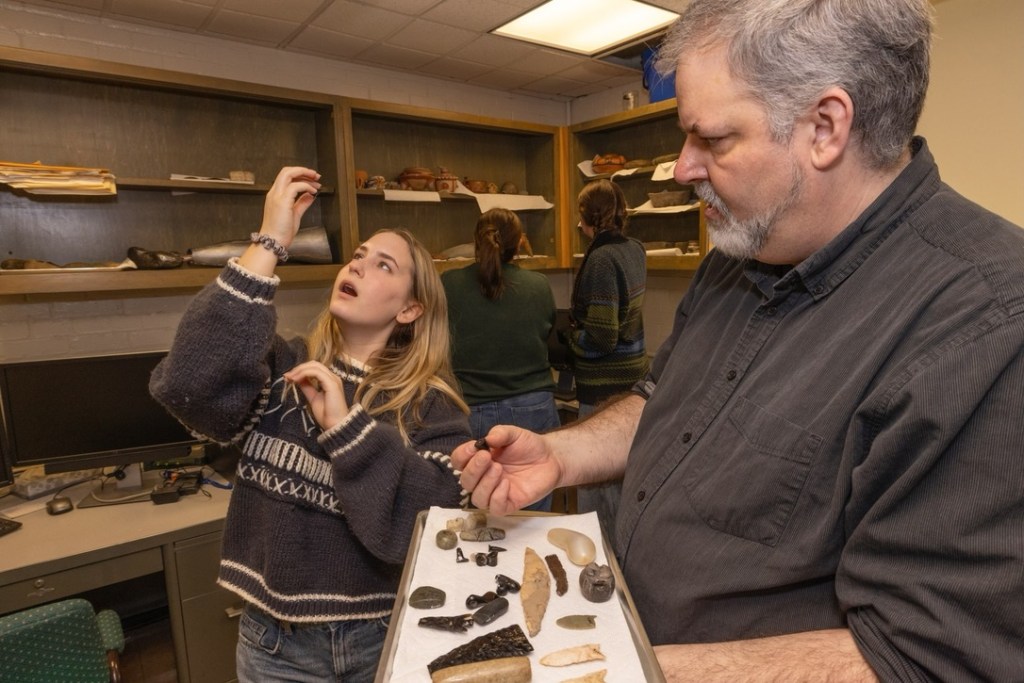
This is me, in my senior year, observing an object in our collection during a promotion for the anthropology department
The Magic of Collecting
Svansberg called it that. “The Magic of Collecting.” That little phrase was used to describe the art that is making a good collection. It all comes down to the choices that are made. Museums want collections that align with their mission, that serve the public, and that are well maintained. Collections management is an administrative practice that allows for just that. It acquires, documents, and preserves the objects that are on display and in storage at museums. This can be spread across any kind of institution- from archaeological, fine art, or natural history museums. Essentially, it is the heart of the museum. Every area can be connected back to the collection.
The larger the museum, the more specific a job title can get, and the smaller the museum, the more general. Because of this, a collections manager can have duties that range from secretarial jobs as a registrar to hands-on preservation (Young, 2019). One such role is that of accessioning. That is where the collection starts. As I said earlier, the collection should match the mission statement of the museum, so being selective is key. If something is proposed for acquisition, the collections manager, along with members of the Board of Trustees and other important personnel, establishes the criteria they wish for the potential addition to meet. Collecting and presenting artifacts are what give them meaning. The meaning is what matters. Many people will not look at a work of art and know who made it and what style it is, but they’ll know when it makes them feel something. That is the magic of collecting.
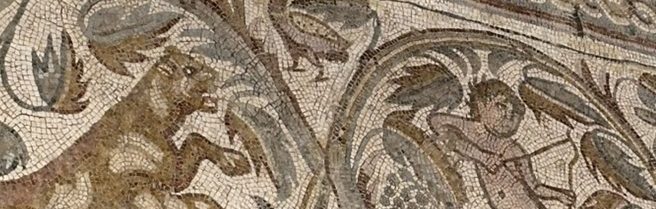
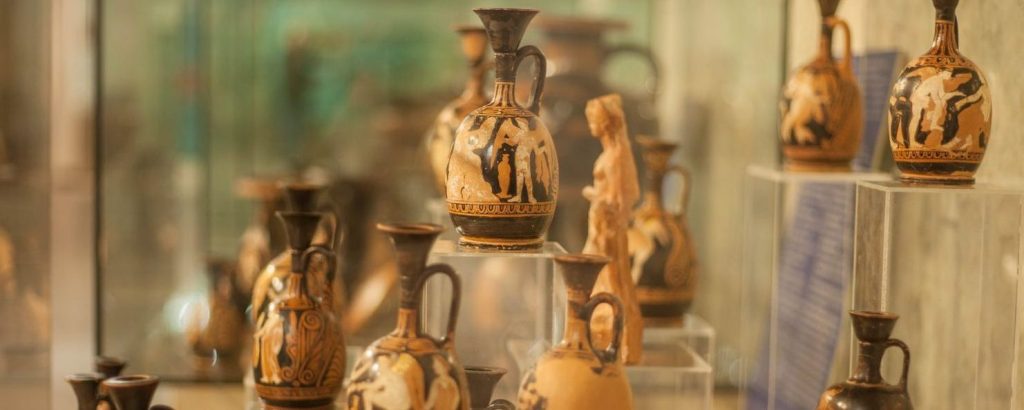
Mosaics from the Badajoz Provincial Archaeology Museum in Badajoz, Spain
Can History Be Modern?
If someone were to ask you to picture a museum, what would you see? Dusty old cabinets filled with ancient artifacts or curious specimens? Yellowed pages scribbled with notes about the displays? That may have been true 100 years ago, but museums today rely a great deal on technology and modernity.
This shift to digital practices has especially affected the work done in collections management. The record-keeping of a collection is an essential part of the job. Utilizing digital records makes this much easier and more secure. There is no longer a reliance on outdated physical pages that are hard to read or could get lost. Instead, things can be searched through easily, copied, and backed up, making the process as a whole much more efficient. It also saves physical storage, which can be valuable to a growing museum. When considering the fact that museums are meant to serve the public, we see another benefit of the digitization of museum collections. Now, objects can be scanned using techniques such as 2D imaging or structured light scanning, allowing for people to have access to a 3-dimensional view of objects in the museum’s archives- broadening the scope of education. However, a 2018 study found that many digitized collections do not have their entire collections published, which diminishes the value of the technology (Avgousti, 2023).
The downside of this change is that smaller museums are struggling to keep up. Software is not cheap. For small-scale institutions to stay up to date would require significant fundraising due to insufficient resources and staff (especially those who are skilled in technology) (Avgousti, 2023). The day that technology can become accessible to institutions of all sizes is the day that we will truly reap the benefits of the modern era.
This graph shows how many of the objects in the Smithsonian have been digitized and published.
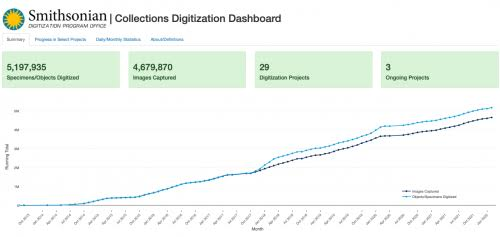
Smithsonian Institution. (n.d.). Collections digitization dashboard [Dashboard]. https://osprey.si.edu/
Regarding DEAI
Repatriation has greatly impacted how museums operate. It shows just how they have grown and changed over time. Due to laws such as the Native American Graves Protection and Repatriation Act (NAGPRA), artifacts can be reclaimed by Indigenous tribes in America. This increases diversity in museums and gives power to people who have historically not had a voice.
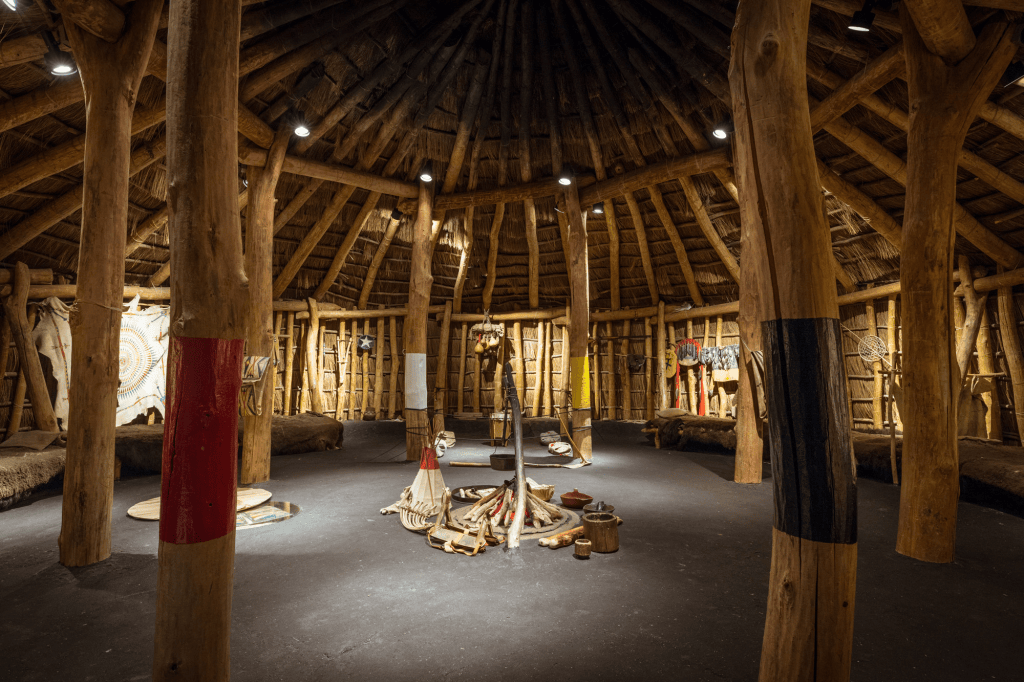
Field Museum. (n.d.). Pawnee Earth Lodge [Photograph]. https://www.fieldmuseum.org/exhibition/halls-and-galleries/pawnee-earth-lodge
Additionally, incorporating native artifacts into displays is a way to diversify the kinds of things that the public is exposed to. A few months ago, I went to the Field Museum in Chicago, where I stopped by an exhibit showcasing objects from different Native American tribes- modern and ancient. It allowed me to really learn about cultures and perspectives that I didn’t have much previous exposure to. So, circling back to the idea that museums strive to educate the public, diversity serves that purpose by teaching viewpoints to people who might not otherwise have access to that information.
Why is Collections Management Important?
Collections work makes a museum a place for people to learn. It’s the center of an institution. Working in this department means you get hands-on experience with the objects in the museum, whether it’s bringing objects into the collection, taking care of/ preserving them, documenting them, or even doing some of the legal work associated with these tasks.