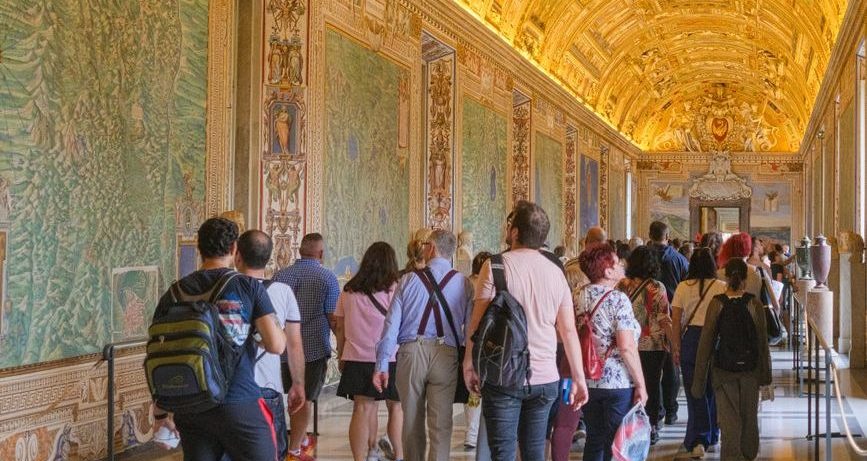
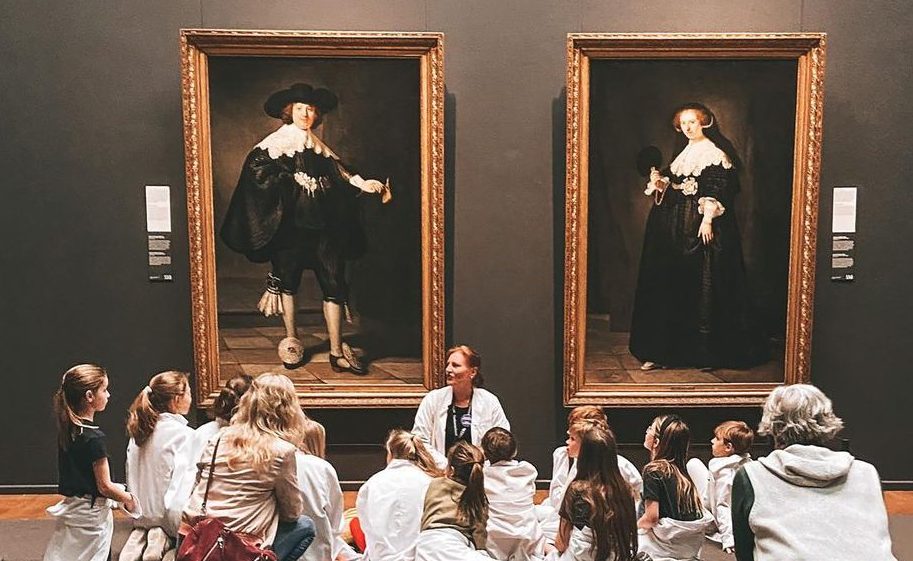
The objects in museums are only of value to the public if visitors can apply meaning to them. However, it’s important to note that meaning does not equal appreciation. We can look at a pretty painting and like the way it looks, but without the deeper understanding of who painted it, how it was made, when it was from, etc., it could be just a pretty painting. Therefore, it is the job of museum educators to shape that understanding. They do this by explaining the exhibits to visitors and students in a way that they can follow. This is done much more successfully when educators work in collaboration with other teachers in their community. For example, if a class of young students was visiting a museum as a field trip, it would be important for there to be communication with their teacher to make sure what they were going to learn would be aligned with their curriculum. Visits like these matter because they serve the public through education and shape future interests. Knowing an audience and being empathetic and adaptable is an essential part of being a museum educator. However, being adaptable is not only limited to individuals. They should also be carried in the flow of the changing world around them. Adjustments in technology and accessibility could also shape the mold that their lessons are put into.
I can’t say that I have much experience in museum education. In fact, I would say the only times that I get close to this field are when I visit museums with my friends. That’s when I act as a personal guide, teaching those around me about different works of art or kinds of artifacts and discussing ideas with them, whether they want me to or not.
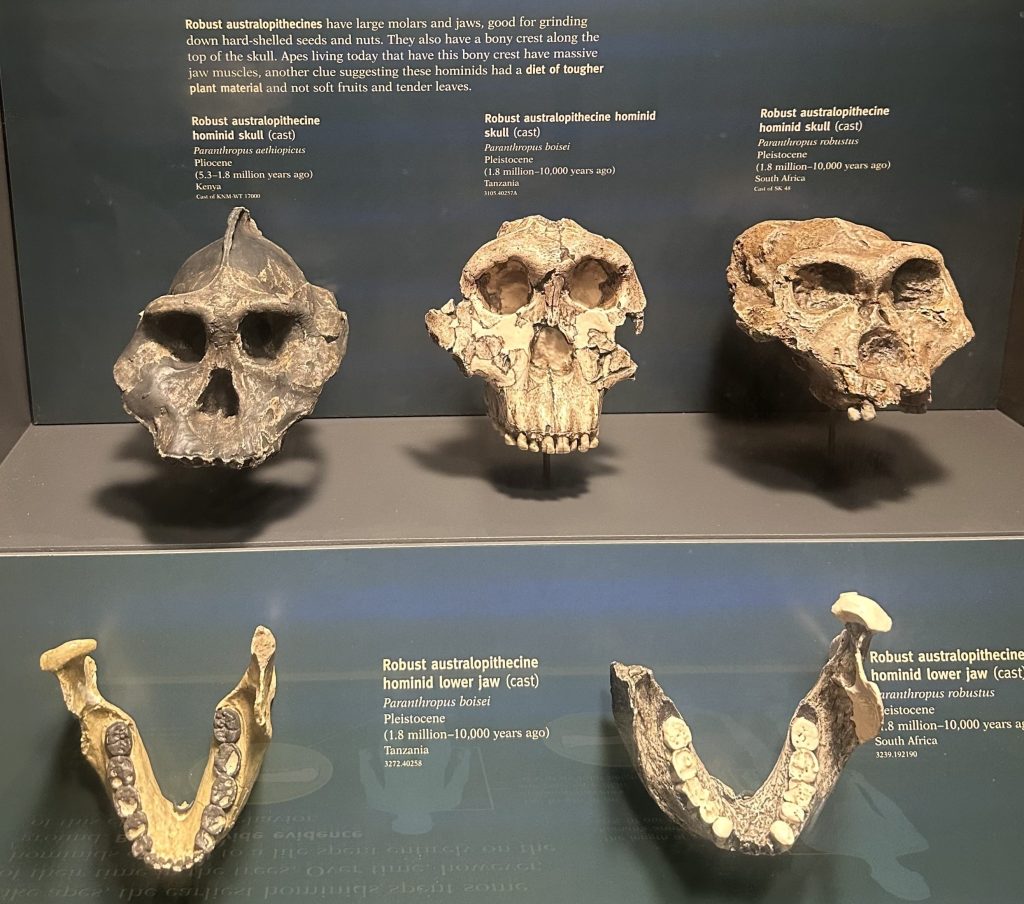
This is the picture I took of the robust australopithecine skulls at the Field Museum after I finished explaining to my friends the entirety of the paper I wrote on them in college, while they smiled and pretended to listen.
One thing I do know, though, is teaching kids. In my case, the four walls of a museum are changed to the lines of a volleyball court; however, the basic concepts are all the same. Lesson plans are swapped for practice plans, core ideas are taught with lectures, questions, and feedback, and I am continually learning myself, because a good teacher must stay curious.
Narrowing the [Camera] Lens
I have been and will be saying “museum educator” throughout this post, but what exactly does that mean? Broadly, it’s what I stated above- they make the objects make sense to the layman, but depending on the needs of the institution, their roles can change. They can be an officer of public engagement, a coordinator of specific school programs, or a producer of digital learning. One thing that they all have in common? Their work is centered around people, even when it is done digitally.
There are many benefits to learning on-site at museums. Object-based learning can let the exhibits do the heavy lifting, letting kids put into perspective the lessons they are hearing. In instances where this isn’t possible, though, digital lesson are very useful. In fact, with new technology, much of museums’ collections are available in 3- Dimensional scans , making it easy for people to see and learn about objects, even at home (I touched more on this in the Collections page). A large-scale example of this is the VR model of Chauvet Cave. Most people can’t fly out to France to visit the cave, but a digital scan of it is easily accessible on their website, ready for educators to use.
This is an image taken from the Ancient Art Archive, where people can virtually learn about the Chauvet cave paintings
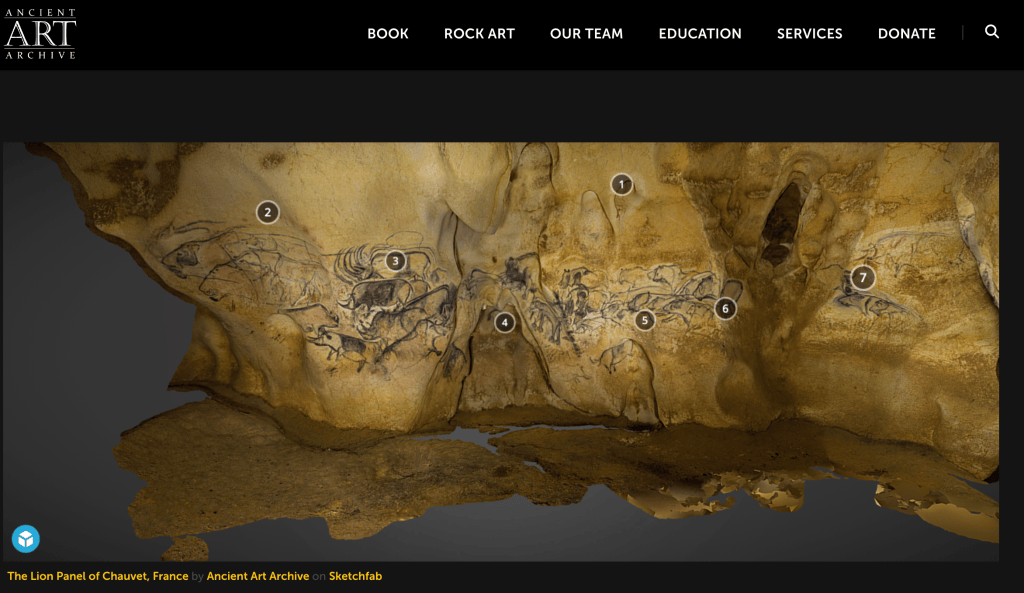
If you want to take a look: https://www.ancientartarchive.org/international_site/chauvet-pont-darc-cave-france/
In her 2025 article, “Museum Educators’ Views on Digital Museum Education: Opportunities and Challenges,” Camille Dumont asks museum educators themselves what their thoughts are on digital education. Alongside the idea that knowledge becomes more accessible through technology, as I talked about above, one finding that came from this study was that it benefitted the schools, whether that be financially or by increasing the content that school teachers can show their students. Naturally, all of these benefits come with equal challenges, so this is up to the decision of individual educators and their institutions.
Access-ability
When discussing the scope of museum education, especially digital education, we must consider the physical ability of visitors. Empathy is an important skill for museum educators to have. They have to know who they are teaching- how they learn or if they are capable of visiting the museum in person. This is all regardless of age or health. There are many different styles of learning, whether it’s through visual, aural, or tactile cues. Museum educators should take these strategies into consideration in order to best accommodate people of all kinds of backgrounds and capabilities.

Why is Museum Education Important?
It is a museum’s mission to teach the people who come through its doors. This puts museum educators right in the heart of what is essential to these institutions. They are the ones who translate the collection into something visitors can grasp. Whether it is through their own lessons or the help they give to other teachers, museum educators introduce learners to a new world of information they wouldn’t otherwise have access to.
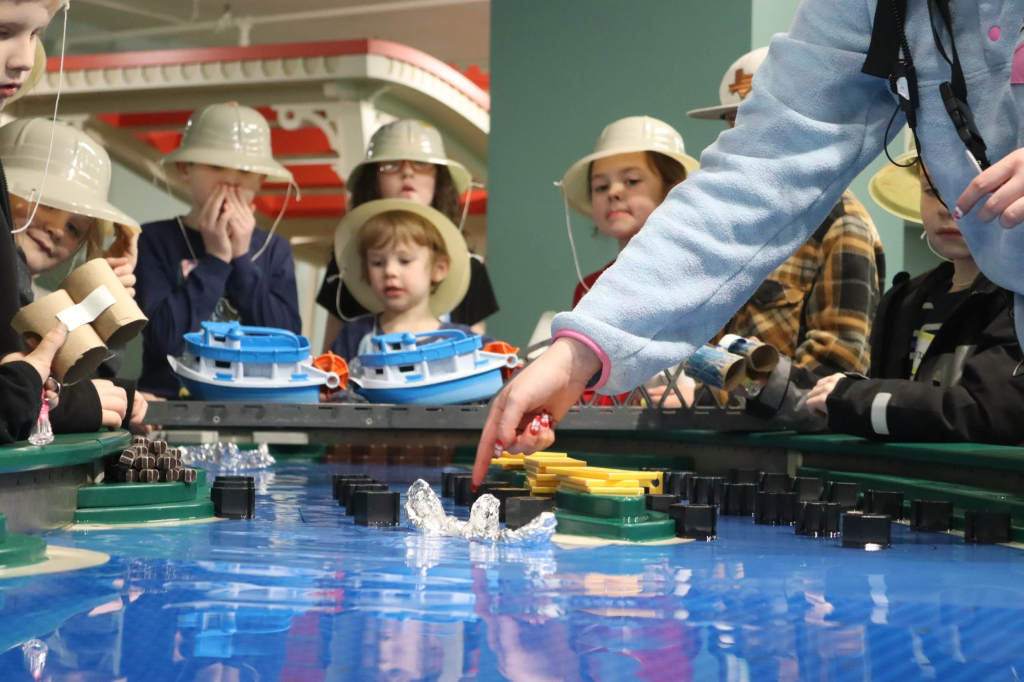
Discovery World on Market. (n.d.). [Children participating in a hands-on water activity]. https://dwonmarket.org/
Sources:
Ancient Art Archive. (n.d.). Chauvet-Pont-d’Arc Cave, France. https://www.ancientartarchive.org/international_site/chauvet-pont-darc-cave-france/
Dumont, C., De Backer, F., Dewinter, H., & Vandermeersche, G. (2025). Museum educators’ views on digital museum education: opportunities and challenges. Cultural Trends, 34(3), 398–413. https://doi-org.proxy1.library.jhu.edu/10.1080/09548963.2024.2378324
MUSEUMPEDIA. (n.d.). Museum educator roles. https://museumpedia.org/museum-careers/museum-educator-roles/